

Most small business owners treat their website like a storefront sign. You put it up once and assume people will find it. That thinking is why websites need continuous promotion to survive in a competitive digital space. Digital channels now account for over 72% of total marketing spend in 2026, which tells you something critical: your competitors are not sitting still. A website without ongoing promotion is a billboard in a forest. Nobody sees it, and nothing grows.
Table of Contents
- Key Takeaways
- Why websites need continuous promotion
- Core components of a continuous promotion strategy
- Common pitfalls that kill promotion momentum
- How to build a manageable promotion routine
- Measuring success and refining your approach
- My take on why consistency is the real competitive edge
- How Thomasdesigns supports your ongoing promotion
- FAQ
Key Takeaways
| Point | Details |
|---|---|
| One-time launch is not enough | A website needs consistent promotion to maintain visibility and attract new visitors over time. |
| Content updates must be substantive | Adding new sections or data improves SEO; simply changing a date does not signal freshness to search engines. |
| Measurement drives better results | Businesses that track ROI from digital efforts are 1.6 times more likely to see positive returns. |
| Consistency beats occasional bursts | Long-term, steady promotion compounds over time and outperforms ad-hoc campaigns in every measurable way. |
| Paid and organic work together | Paid ads generate fast traffic but stop when you stop paying; organic promotion builds lasting, compounding value. |
Why websites need continuous promotion
Think of your website like a physical store in a busy neighborhood. You would not open the doors once, lock up, and expect customers to keep coming back without any advertising, window displays, or word-of-mouth. The same logic applies online. The benefits of website promotion are not a one-time payoff. They accumulate over time, and the businesses that understand this early build a serious competitive advantage.
Here is what consistent promotion actually delivers:
- Higher search rankings. Search engines reward websites that publish fresh, relevant content regularly. One strong article from two years ago will not hold your ranking forever.
- Sustained traffic growth. Each new piece of content, social post, or email campaign creates another path for potential customers to find you.
- Brand credibility. A website that looks active and current signals to visitors that you are a functioning, trustworthy business.
- Cost-efficient lead generation. Content marketing costs 62% less than outbound methods and generates three times more leads. That math makes a compelling case for staying active.
The importance of online marketing is not just about visibility. It is about staying relevant. A competitor who posts twice a week, runs seasonal promotions, and maintains a clean, fast website will consistently outrank and outperform a business that launched a website and walked away.
Pro Tip: Set a calendar reminder once a month to review your website's top five pages. Ask yourself: Is this information still accurate? Is there a fresher angle I could take? Small, consistent improvements add up fast.
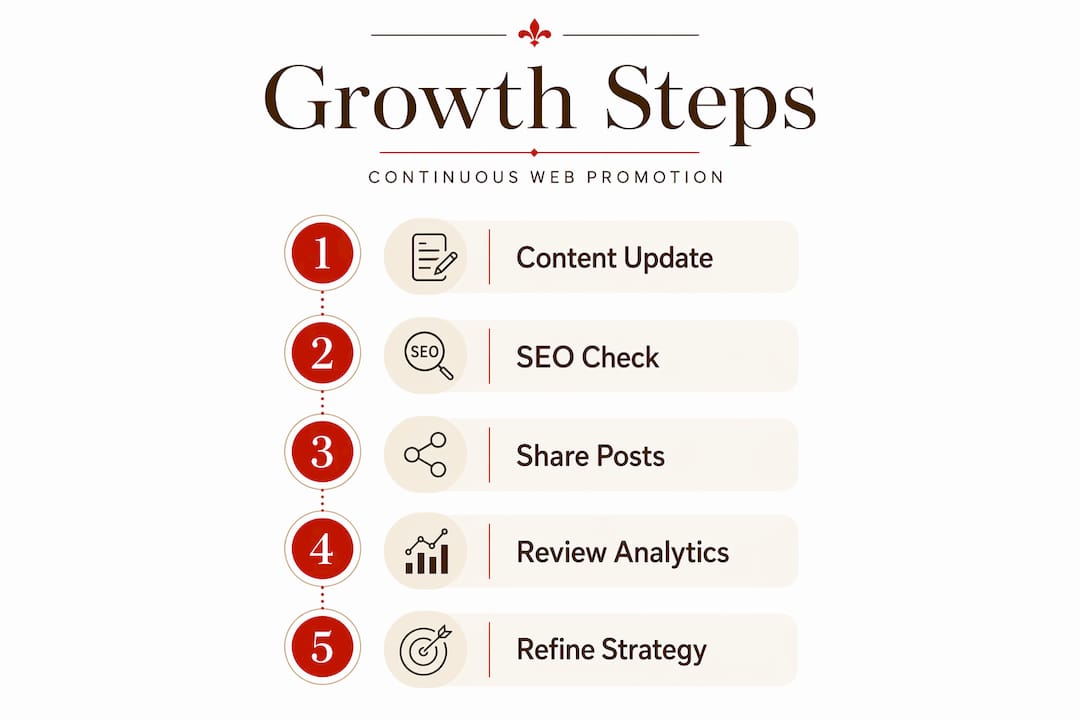
Core components of a continuous promotion strategy
Not all promotion activities carry the same weight. Understanding the difference between what moves the needle and what just keeps the lights on helps you spend your time wisely.
Content and SEO
Fresh, substantive content is the backbone of any effective promotion strategy. Google assesses substantive changes, not cosmetic ones. That means adding a new section with updated statistics or rewriting a paragraph with current examples counts. Changing the publication year in a title without touching the actual content does not. Voice search and AI-generated search results also reward websites that answer specific questions clearly, so writing in a direct, conversational tone is more important now than it has ever been.

Social media and email
Social platforms and email lists are distribution channels for your website content. Every blog post, product update, or service change you publish deserves a push through these channels. Email marketing, in particular, has one of the highest returns of any digital tactic because you are reaching people who already chose to hear from you.
Paid advertising
Paid ads generate traffic from day one but stop delivering results the moment you stop paying. That makes paid advertising a powerful accelerator, not a foundation. Use it to amplify content that is already performing well organically, or to fill gaps during slow periods.
Technical maintenance
A slow, broken website undermines every other promotional effort you make. Broken links and slow load times damage both SEO rankings and visitor retention. Regular technical checks, security updates, and performance optimization are not optional. They are the foundation that every other strategy depends on.
Here is a quick comparison of promotion channels by effort and return:
| Channel | Effort level | Time to results | Long-term value |
|---|---|---|---|
| SEO and content | Medium | 3 to 6 months | Very high |
| Social media | Low to medium | Immediate | Medium |
| Email marketing | Low | Immediate | High |
| Paid advertising | Medium | Immediate | Low (stops with spend) |
| Technical maintenance | Low | Ongoing | Critical |
Pro Tip: Do not treat technical maintenance and promotion as the same task. Maintenance keeps your site healthy. Promotion makes it visible. You need both, and they require separate attention on your calendar.
Common pitfalls that kill promotion momentum
Even business owners who understand why constant promotion matters often fall into traps that quietly undermine their efforts. These are the most common ones.
- Updating only dates. Changing "2024" to "2026" in a title without revising the content does nothing for your rankings. Algorithms detect genuine content enhancements like new data, restructured sections, and added depth.
- Skipping measurement. If you do not track what is working, you are guessing. Businesses that track ROI are 1.6 times more likely to see positive returns. That gap is too large to ignore.
- Treating promotion as occasional. Posting a blog article every few months and calling it a strategy does not work. Your competitors who promote consistently will compound their advantage while you stay flat.
- Confusing maintenance with promotion. Fixing a broken link is not the same as publishing a new service page. Both matter, but only one actively brings new visitors to your site.
Pro Tip: Before you create any new content, check your analytics to see which existing pages get the most traffic. Updating and expanding those pages often delivers faster results than starting from scratch.
How to build a manageable promotion routine
The need for continuous advertising does not mean you need to spend every waking hour on your website. It means building a repeatable system that fits your schedule and compounds over time. Here is a practical framework to start with:
- Monthly content review. Scan your top service and product pages for outdated information, missing details, or opportunities to add a new example or statistic. A practical update schedule for small businesses suggests reviewing service pages every six months, refreshing key blog posts every 12 to 18 months, and publishing new content quarterly.
- Weekly social posting. Pick two or three platforms where your customers actually spend time. Post consistently, even if that means just one post per platform per week. Frequency matters more than perfection.
- Quarterly paid campaign review. If you run ads, evaluate performance every three months. Kill what is not converting. Increase budget on what is working.
- Technical check every 90 days. Run a speed test, check for broken links, and confirm your security certificates are current. This takes less than an hour and protects everything else you are building.
- Annual strategy audit. Once a year, look at the big picture. Which channels drove the most traffic and conversions? Where did you lose people? Use that data to set priorities for the next 12 months.
The goal is not perfection. The goal is showing up consistently. Digital marketing rewards consistent, long-term activity over occasional bursts, and that compounding effect is what separates growing businesses from stagnant ones.
Pro Tip: Block two hours every Monday morning specifically for website promotion tasks. Treat it like a client meeting. When it is on the calendar with a specific time, it actually gets done.
Measuring success and refining your approach
Website visibility strategies only improve when you measure them honestly. Knowing how to boost website traffic is useful, but knowing why your traffic went up or down is what actually lets you repeat success and avoid mistakes.
The metrics that matter most for small businesses are straightforward:
| Metric | What it tells you | How often to review |
|---|---|---|
| Organic traffic | How well your SEO efforts are working | Monthly |
| Bounce rate | Whether visitors find what they expected | Monthly |
| Conversion rate | How many visitors take a desired action | Weekly |
| Top traffic sources | Which channels are actually sending visitors | Monthly |
| ROI per channel | Where your time and money are best spent | Quarterly |
Analytics data is most valuable when you act on it quickly. If a blog post is driving significant traffic but has a high bounce rate, that tells you the content is not matching what visitors expected when they clicked. Rewriting the introduction or restructuring the page often fixes it fast. If a particular social platform is sending zero traffic despite regular posting, that is a signal to either change your approach there or redirect that time to a channel that is working.
Long-term online success is not about finding one magic tactic. It is about building a feedback loop where data informs decisions, decisions improve results, and better results give you more data to work with.
Pro Tip: Set up a simple monthly report with just five metrics: total visits, top traffic source, top-performing page, conversion rate, and one metric you want to improve. Keeping it short means you will actually review it.
My take on why consistency is the real competitive edge
I have watched small business owners pour real money into a website launch, celebrate the go-live moment, and then essentially abandon the site within 60 days. The excitement fades, the to-do list fills up with other priorities, and the website quietly slides down search rankings while a competitor who posts twice a week climbs past them.
What I have learned is that the psychological barrier is the real problem. Continuous promotion feels overwhelming because people think of it as a massive, open-ended commitment. But in practice, the businesses I have seen thrive online are not doing anything extraordinary. They are just doing something every single week. One blog post. One social update. One page refresh. That is genuinely enough to maintain momentum.
The counter-intuitive truth is that occasional bursts of promotion actually cost more in the long run. You pay more for ads when you have no organic foundation. You start from scratch with your audience every time you go quiet for a month. You lose rankings that took months to build. Consistency is not just more effective. It is cheaper.
If you are a small business owner reading this and feeling behind, the answer is not to catch up all at once. Pick one channel, commit to one small action per week, and build from there. The compounding effect of steady effort is one of the most powerful forces in digital marketing. It just requires patience that most people are not willing to practice.
— AngryZZen
How Thomasdesigns supports your ongoing promotion
Running a small business means your time is already stretched. The last thing you need is a website that demands constant technical firefighting on top of everything else. Thomasdesigns builds every site by hand using HTML, CSS, and JavaScript, with no templates and no bloated plugins that break on update day.
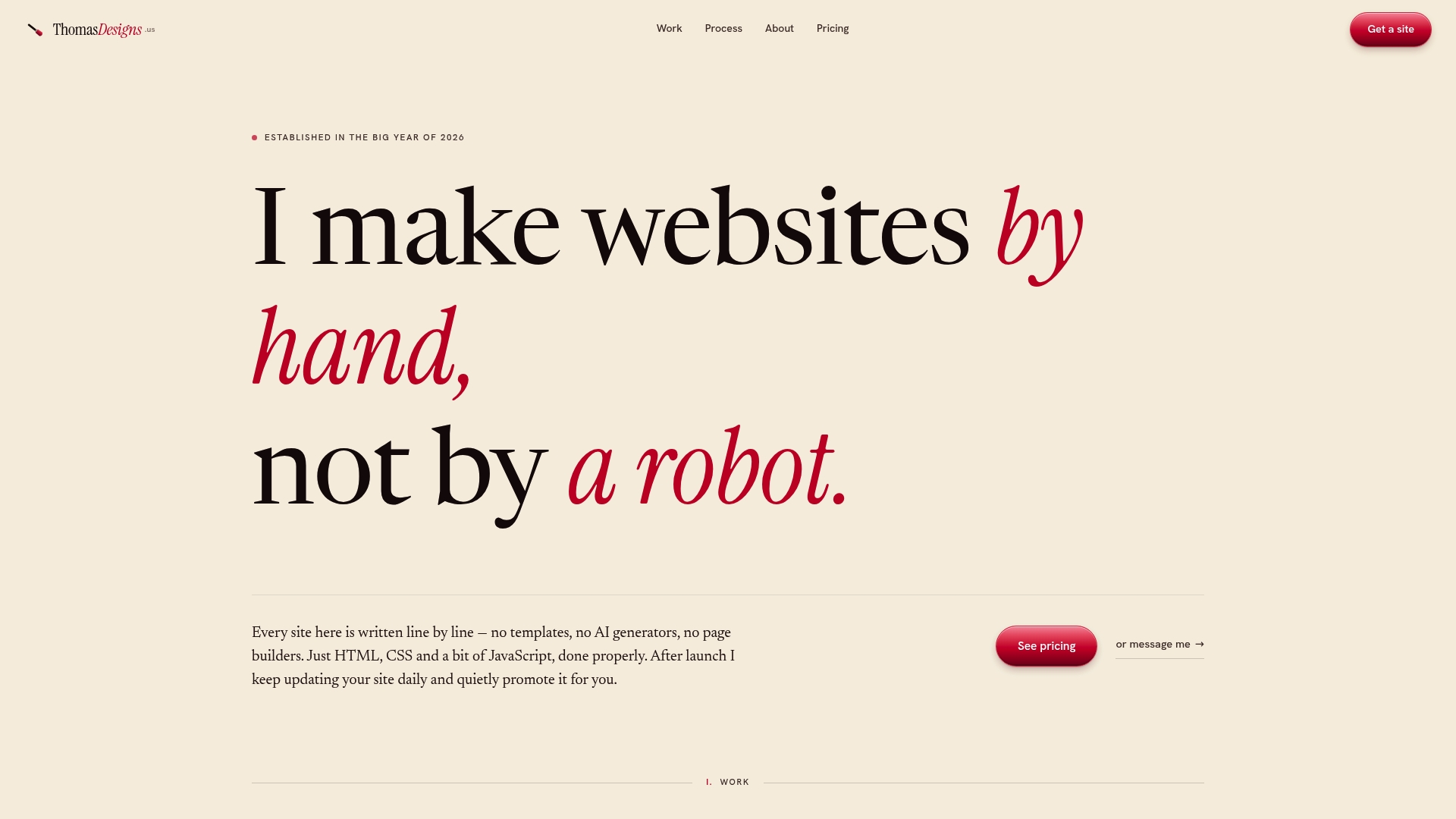
What makes the Thomasdesigns approach different is what happens after launch. Every client gets ongoing promotion support built into the service, including daily updates and visibility work that most agencies charge separately for. If you want a hand-coded website that is built for long-term performance and backed by someone who actually cares whether your business grows, this is where to start. Effective digital marketing techniques only work when the foundation is solid. Thomasdesigns makes sure yours is.
FAQ
Why do websites need continuous promotion to rank well?
Search engines favor websites that publish fresh, relevant content and maintain strong technical performance over time. A site that stops being updated loses ranking signals and gets outpaced by competitors who stay active.
How often should a small business update its website?
A practical schedule includes reviewing service pages every six months, refreshing key blog posts every 12 to 18 months, and publishing new content at least once per quarter to maintain SEO freshness signals.
Is paid advertising enough on its own for website promotion?
Paid ads generate immediate traffic but stop delivering results the moment you stop spending. They work best as a complement to organic promotion, not as a replacement for it.
What is the biggest mistake small businesses make with website promotion?
The most common mistake is treating promotion as a one-time or occasional activity. Inconsistent effort allows competitors to compound their visibility advantage while your traffic stays flat or declines.
How do I know if my website promotion efforts are working?
Track five core metrics monthly: organic traffic, bounce rate, conversion rate, top traffic sources, and ROI per channel. Businesses that measure their digital marketing results are 1.6 times more likely to see positive returns.